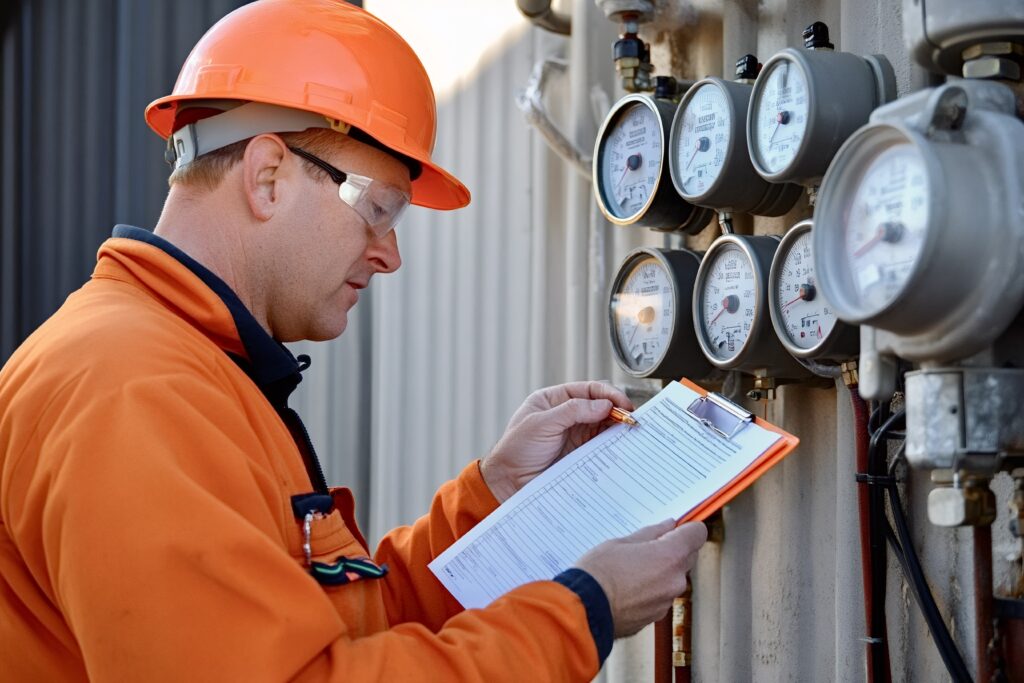
Most plants still run on monthly invoices. The bill arrives, someone gasps at the line for compressed air, and a meeting is scheduled to discuss “what happened last month.” By then it has already happened — there is nothing to do but pay.
Live sub-metering changes the question. Instead of “what happened last month” the question becomes “what is happening right now, and is it normal?” That shift is the whole game.
Estimation hides the drift
When you estimate, you’re working from a model. The model has assumptions — a steam ratio, a baseline kWh per unit, a leak allowance. Drift in any of those assumptions disappears into the spreadsheet and only surfaces in the annual variance.
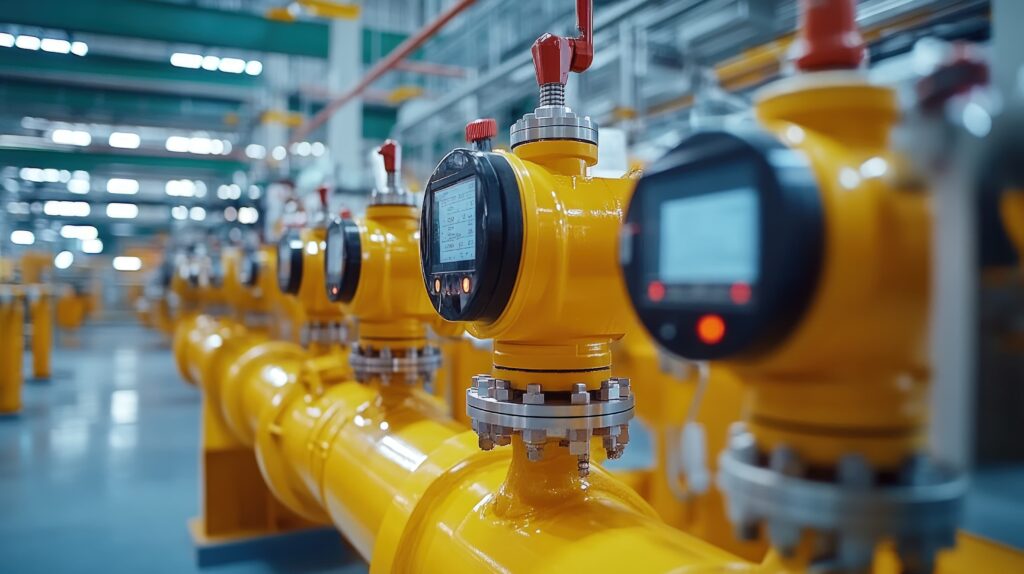
Measurement is harsh by comparison. The meter doesn’t care about your model. It tells you, every 30 seconds, what is actually flowing through the pipe.
What changes when you start measuring
Three things, in our experience. First, leaks become visible — not because they’re suddenly bigger, but because the baseline shifts. After-hours flow that used to be lost in the noise of the monthly bill is now a flat line on a dashboard, and everyone can see when it ticks up.
Second, ratios become useful. kWh per unit produced, water per kg of steam, kVAr per kVA — these are only insightful if the inputs are measured at the same cadence. Hourly numbers paired with daily numbers don’t tell a story.
Third, conversations change. The plant manager and the finance team start arguing about the same numbers, in the same room, in real time. That’s the actual outcome — not the numbers themselves, but the alignment they create.